• Skip to primary navigation
  • Skip to main content
  • Skip to footer

The Jo Cox Foundation HomepageThe Jo Cox Foundation

  • About
    • About us
    • About Jo Cox
    • Ten Years of Jo Cox’s Legacy
    • Our team
    • Our partners
    • Work for us
    • Diversity and inclusion
    • Get in touch
  • Our Work
    • A Safe and Respectful Democracy
      • Jo Cox Civility Commission
        • Summary of recommendations
      • Civility Pledge
      • Joint statement on conduct of political party members
      • Resources to address abuse in politics
    • Stronger Communities
      • Resource library
      • Event calendar
    • Great Get Together
      • Toolkit
      • School resources
      • FAQs
    • More in Common Network
      • Find a group or partnership
    • Our work in West Yorkshire
    • Loneliness Policy Action Group
  • Support Us
    • Become a partner
    • Leave a legacy
    • Online Store
    • Fundraise
      • Challenge events
  • News
  • Donate

connecting communities

Bridging Divides – learning from Common Room workshops in 2024 

February 21, 2025 by Will Fletcher

After taking part in our Common Room workshop on Hate Crime led by Communities Inc, one participant commented:

I made connections with some partners I had worked with previously and also established some newer connections.  In light of the recent national disorder, it is even more important that these partnerships continue to work together and reach out to the community.
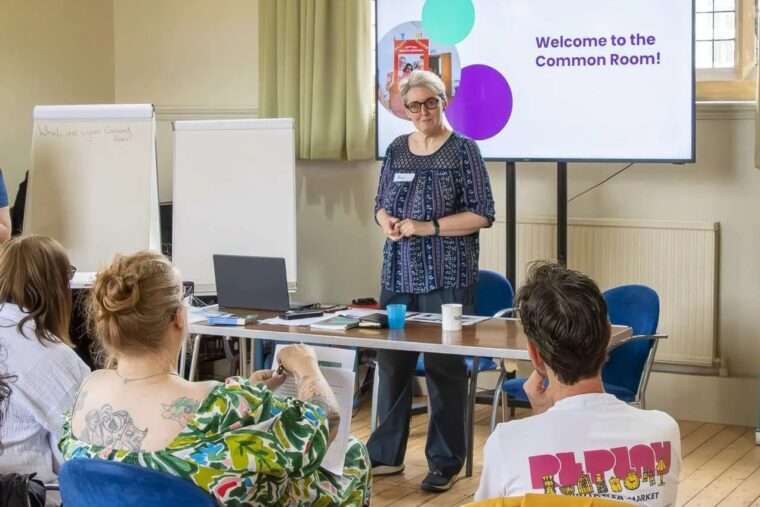
We couldn’t agree more. This is exactly why we organise Common Room workshops. They provide a friendly, safe space to hear from people with lived or learned experience, connect with others and share ideas for the development of community practice.  

Series 4 of our Common Room workshop programme in 2024 was titled Bridging Divides and Connecting Communities. The aims of these Common Room sessions were to:

  • Provide training and practical advice on topics that relate to bridging divides, countering hate, increasing social connection and promoting community cohesion; 
  • Increase the knowledge and skill set of More In Common Network members and a wider audience including professional, community groups and individuals.

The topics were drawn from the work and concerns of our network of groups and partnerships and based on values that Jo Cox was committed to.  In 2024 we chose topics which were deeper and more sensitive than previous years, due to demand.

On 23rd May in Nottingham with Communities Inc we discussed Hate Crime: the impact on communities in Nottingham, and how to respond. 

Giving feedback, one person wrote:

I got the opportunity to meet other criminal justice and community members with a common interest in relation to tackling hate crime and working to improve community cohesion.

With Mahmooda Qureshi of The Faith and Belief Forum (Walsall) and Gabriella Gay representing Under One Roof community heritage project (Stoke) we explored Social Action in a Zoom session online, on 10th June.

Martin reflected on:

Two exemplary practices for bridging communities and faiths respectively. [I was] struck by Gabriella finding that communities did not have many existing cross-links.

Who Is Your Neighbour? led our session on 10th July in Bradford, in which we talked about conversations that matter:  the ways dialogue can disrupt division.

When discussing key takeaways from the session, Pete said:

Thanks to everyone who showed up. I think it’s ABOUT showing up! I took away [the] power there is in really listening, and equally the satisfaction in being heard by my peers. I talked with several people and felt their passion at the training.

We learned about taking the middle ground: how to respond to anti-minority views, on 18th July in Cardiff with Gareth Harris.

One participant enthused:

Hearing from someone with the knowledge, experience and view points that Gareth has – a training like no other I have done before in terms of the subject matter. It was incredibly useful and important to hear and see different perspectives.

The sessions were unexpectedly timely, as within a week of the final event, a series of violent protests took place around the country including in Nottingham, Leeds, and Stoke (areas of focus in the sessions), instigated by some of the anti-minority groups which Gareth informed us of in the final session. 

What did we learn?

Over the four sessions we learned that building trust and bridging divides in communities relies on offering deep listening beyond immediate expressions of fear and hate, relational approaches, attending to grievances, connecting people over shared concerns to build power and take action together. 

Our learning from each Common Room workshop, with links to resources we found useful, will follow in future blog posts. Come back soon to find out more! 

What’s next?

In 2025 we are holding series 5 of the Common Room programme in Cardiff, Nottingham and Stoke on Trent, and one online, between March and June. These events will be by invite only, to keep the spaces safe and focussed. However we are always keen to speak with potential collaborators, so if you would like more information or to arrange a chat please email [email protected] 

We are planning our More In Common In Action conference in Manchester in May, an opportunity for More In Common Groups and Partnerships and interested individuals to share learning and ideas for action. Please sign up to the More In Common Newsletter at the bottom of this page if you would like to know what’s coming up.

Find out more

You can read more about each of the Common Room workshops that we held in 2024 in the separate blog entries that are linked to below:

  • Hate crime: the impact on communities in Nottingham, and how to respond
  • Bridging Divides through Social Action
  • Troubling conversations in everyday settings
  • Taking the Middle Ground: How to respond to extreme views in your area
Featured Page

More in Common Network

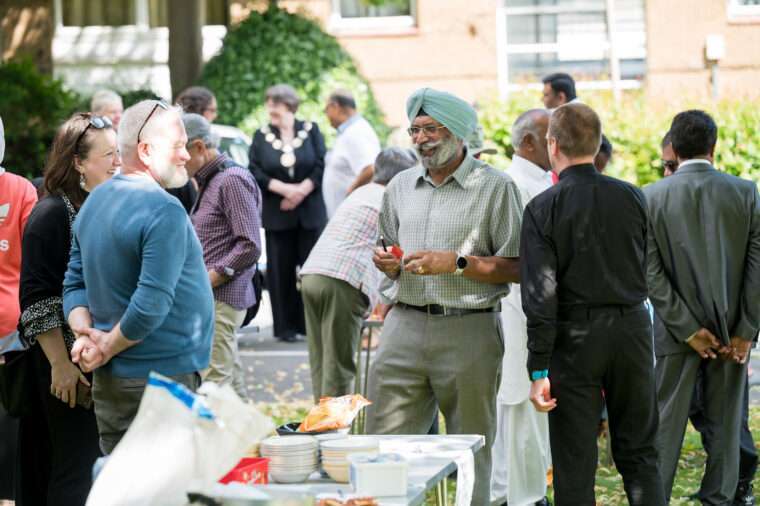
More in common network The More in Common Network is a collection of groups and partnerships across the UK who champion Jo Cox’s powerful ‘more in common’ message to bridge…
Read more

Filed Under: More in Common Network, Stronger Communities Tagged With: connecting communities

Impact of the Great Get Together 2024

December 12, 2024 by Richard Evans

The Great Get Together, inspired by the late Jo Cox MP, brings people together each June to celebrate what we have in common.

Over 600 Great Get Togethers took place across the UK in June 2024; from sing togethers, street parties and living history events, to refugee walks and brews and chats between neighbours.

During times of division and polarisation, community events associated with a national moment are a powerful tool for fostering feelings of community. In 2024, 85% of Great Get Together organisers set out to bring people from different backgrounds together. 

In this report we share some of the impact that the Great Get Together 2024 had on people and communities. A huge thanks, as always, to the thousands of organisers around the country who put on a local Great Get Together. You are the ones building community resilience and bringing Jo Cox’s ‘more in common’ message to life each year. We are incredibly grateful.

Report: The Great Get Together 2024

This year’s Great Get Together will take place on 20-22 June 2025. Please think about what you could do and consider adding the Great Get Together on 20-22 June to your calendar!

Filed Under: Great Get Together, Stronger Communities Tagged With: community events, connecting communities

Connection Conversation with Age UK Calderdale & Kirklees

March 15, 2024 by The Jo Cox Foundation

This is part of a series of conversations with member organisations of the Connection Coalition.

Rachel Horner is Chief Executive at Age UK Calderdale & Kirklees. Here she discussed this local charity’s work, the specific issue of loneliness and the benefits and challenges of befriending to combat it, and her pride at their person-centred approach to local service provision.

Being a CEO

I’ve been with Age UK Calderdale & Kirklees for over 10 years, previously working as our Financial Executive. In finance everything was usually pretty black and white, but not so much as Chief Exec! Its been a fascinating and rewarding new challenge, navigating a lot of meetings where my role is more complicated than before, but it’s been an opportunity that I’ve been very grateful for. 

A local Age UK

We’re a local charity, affiliated with but entirely independent from the national Age UK organisation. Age UK was formed when Age Concern and Help the Aged merged and it was another merger that brought me where I am now – Age Concern Calderdale and Age Concern Kirklees joined forces around 2009. I was a consultant helping with the finances, and as so often happens, a short term piece of work turned into something much bigger!

Age UK pros and cons

There are many benefits to being part of the national Age UK network – not least the learning and sharing we do between the affiliated charities, and we get some funds and contracts because we’re part of that bigger Age UK picture. But it brings interesting challenges too. A major one is getting across to the local community that our charity is indeed independent and local – that any donations they make to us stay local. 

Loneliness 

It feels like we’re more aware of loneliness than ever, and that it’s more prevalent than ever. I think I read a statistic the other day that 85% of men feel lonely after a close bereavement – which is hardly surprising. At the same time it feels like the resources we have to deal with it are dwindling. We run a befriending scheme to try to help people experiencing loneliness, but of course that’s just the ones that come to us, we also try and work with other services such as GP surgeries to try and reach others who are feeling lonely.

Befriending

Our befriending work stands out as being a particularly vital way for us to do something about loneliness in our communities at the moment. But we really need more volunteers. We find people are really good at giving their time for one-off things but it’s volunteering on a regular, longer-term basis that we’re in need of – it’s a big challenge for us. We have a constant waiting list for our befriending scheme. Really valuable connections are built when befriending done in the traditional way, and we are always in need of fantastic volunteers who can dedicate their time on a longer term basis. We also need ideas of new ways of approaching befriending. Doing befriending in collaboration seems to be a way to go – community groups might offer more choice for friendships and aren’t reliant on one volunteer over a long period of time.

A host of services

We deliver a lot of services for the local community besides befriending – I’ll try to pick out a few. Our information and advice service is hugely important in helping with things like benefits. Another crucial service is our Wellbeing (daycare) Centres, which provide transport to the centre, activities and a warm lunch. We have a handyperson service for small everyday jobs that people can’t do themselves anymore, plus we have a trusted trade directory for bigger jobs. Our home from hospital service is also really important, ensuring older people who’ve spent a while in hospital go home to heating that works, food in the kitchen, a cup of tea made for them, a reminder of where the remote control is! 

Speaking of remote controls, what do you think about the relationship between tech and loneliness?

So many services in life are now only available through the use of tech, if someone has a problem using computers then it becomes a massive issue. There is nothing like face to face contact to connect people and combat loneliness, so digital technology in general, isn’t a complete solution to loneliness at all – but it can have enormous benefits.  I was recently with a gentleman whose daughter had emigrated to New Zealand, he was finding video calling tricky due to the size of the buttons. We were able to provide a simple video calling platform for him to use which didn’t have any buttons for him to worry about, which meant when she called she just popped up on screen. It was such a joy knowing he could speak to his daughter on Christmas Day. Moments like that make me proud of the massive difference we can make in individuals’ lives

Client centred

People can refer themselves for most of our services  – they don’t need to be signed up as a member or anything. We’re client centred, so we always work to understand whoever it is we’re talking to, what their individual needs are, and try to figure out how to best help them. We’d never dismiss someone’s needs by saying ‘sorry, can’t help you with that one’ – we always do what we can or find someone else that can help. It’s our ethos of treating people as individuals, listening to them and responding to their individual needs that I’m most proud of in all we do. 

If you’d like to connect with Rachel, she can be reached here [email protected].

Filed Under: Connection Coalition, Stronger Communities, Uncategorised Tagged With: combat loneliness, connecting communities, connection coalition

Connection Conversation with Generations Working Together

February 15, 2024 by The Jo Cox Foundation

This is part of a series of conversations with member organisations of the Connection Coalition.

Alison Clyde is CEO of Generations Working Together, the center of excellence for intergenerational work in Scotland. The organization has grown rapidly in the last few years and, with a strong team in place, has become a prominent voice in advocating for intergenerational practice across the UK and internationally.

With global intergenerational week on the horizon (24-30 April), Alison sat down to chat with the Jo Cox Foundation about their work, the global campaign, and the importance of embedding intergenerational work across society.

Why is intergenerational practice important?

We tend to segregate people by age, which can mean different generations see themselves as separate entities in our communities. That can lead to misunderstanding, prejudice and fear between age groups, which can in turn encourage social isolation and loneliness. 

Intergenerational practice very clearly benefits the individuals directly involved. Connection with people of very different ages helps challenge any damaging assumptions and prejudice they might hold. This connection can also help young people understand their own aging. And the activity can help build the confidence of people of all ages.

Crucially though, intergenerational practice is also beneficial for the people around the individuals involved – their families, friends and their wider communities. Through the breaking down of prejudice, this kind of practice helps tackle social isolation and loneliness, building bridges between people who may not usually connect, and so contributes to making our communities more cohesive and resilient.

More in Common

So put simply, the aim of intergenerational practice is to bring people together in activities which promote greater understanding and respect between people of different generations. For that aim to be met, the activities that people take part in have to be purposeful and mutually beneficial. 

The right kind of activities, in the right kind of environments, that aren’t ‘badged’ for particular age groups, can show that people of different ages often have more in common than is generally acknowledged. 

Essential, not nice

There’s long been an attitude that bringing people of different ages together is a nice thing to do. Infants playing with older people in a nursing home and bringing each other joy – of course it’s a lovely thing. But it’s not just that, this work is absolutely essential. 

Covid changed our perceptions around how important using an intergenerational approach could be for everyone.. The challenges of the pandemic were overwhelming for people across the country and many great projects ended due to the complexities of how to safely bring younger and older people together.  As a result we wanted to build resilience in intergenerational work by supporting people to build stronger and sustainable projects. To do this we began a partnership with Linking Generations Northern Ireland (LGNI) and Apples and Honey Nightingale to create a quality standards toolkit in intergenerational practice and to pilot the toolkit across the UK to over 30 projects. One key area of change within the toolkit involves training to  increase knowledge and confidence for everyone involved and not just lying with one key person. 

Therefore we are  changing the way we view and do intergenerational practice, it’s no longer an add on. We’re working with intergenerational partners to change this ‘nice’ narrative, to make this work sustainable and ensure it grows and doesn’t disappear.  This will be our call to action on 14 February. 

Global Intergenerational Week

On 14 February we’re launching Global Intergenerational Week 2024, which will take place between 24-30 April. There will be a launch event held online at 1pm (UK time) on 14 Feb, registration for that is open now! (details here)

This is an annual campaign, now in its fifth year. It always falls on exactly the same dates each year. 

This year there is a different theme for each day. Day 1 is about raising awareness of intergenerational practice and its benefits. Day 2 is around building strong and sustainable partnerships. Day 3 is specifically about combating loneliness and social isolation. The other themes  involve ageism, solidarity, workplaces and intergenerational spaces and communities.

We’ll be running seminars that week on different topics, such as how to get funding for intergenerational work. We’ll be encouraging the sharing of resources and advice on activities that have proved effective in meeting the aims of intergenerational practice. And we’ll also be running photo challenges and encouraging a lot of noise on social media. 

The full list of themes, ideas and resources for the week, is available here. We encourage everyone interested in taking part during the week to sign up as a supporter (free).

We want to attract people that are new to intergenerational practice as well as those who have been working in the area for a while. We’ll be engaging with those working at grassroots level all the way up to national government. And as the name suggests it goes beyond the UK – we have 15 countries involved this year.

The international context

We run 18 local support networks in Scotland, meeting in person and online. We’re also part of an emerging UK network, with a new national intergenerational center recently launched in England (CIPRD) and lead partners in Wales and Northern Ireland (LGNI). 

Looking further afield, we’re connected with partners in numerous other countries. The US has been doing this work for longer than us, often ‘co-locating’ nurseries and homes for older people, and we’ve learnt a lot from their experiences and knowledge. Australia has been exploring intergenerational work academically for a while, and two years ago launched their national Institute for Intergenerational Practice.

Similarly, Generations Working Together is a national center for intergenerational practice here in Scotland recognised for our expertise in the field. The process for us becoming a nationally recognised center started back in 2007 when a Scottish Government consultation acted upon research showing more segregation happening between age groups, greater movement of people in and between our communities and increasing fragmentation within families.

It’s that fragmentation that means we tend not to work with familial models, though of course families remain incredibly important in bridging barriers between ages – and in fact there remains a lot of this kind of kinship work in the US and in the UK.

Reach out

I’d say to anyone reading this who is interested in intergenerational practice to visit our website and reach out to our staff team if you have questions. If you live outside of Scotland you can still be a member however there is also the option of connecting with your own national center. For England visit CIPRD , Northern Ireland LGNI and we have connections for the Welsh network, so lots of ways to connect and learn more. GWT’s membership is free for a great many people and we’ve recently introduced new membership categories for international members which we hope will make it more affordable for others. 

Filed Under: Connection Coalition, Stronger Communities Tagged With: combat loneliness, connecting communities, connection coalition, intergenerational

Footer

Fundraising Regulator badge with validation link
  • Twitter
  • Facebook
  • Instagram
  • LinkedIn

Contact us

About us

Jobs

Donate

The Jo Cox Foundation is a registered charity (no. 1170836) and registered company (no. 10392667) in England and Wales.
The Jo Cox Foundation © 2026. All Rights Reserved. | Privacy policy