• Skip to primary navigation
  • Skip to main content
  • Skip to footer

The Jo Cox Foundation HomepageThe Jo Cox Foundation

  • About
    • About us
    • About Jo Cox
    • Ten Years of Jo Cox’s Legacy
    • Our team
    • Our partners
    • Work for us
    • Diversity and inclusion
    • Get in touch
  • Our Work
    • A Safe and Respectful Democracy
      • Jo Cox Civility Commission
        • Summary of recommendations
      • Civility Pledge
      • Joint statement on conduct of political party members
      • Resources to address abuse in politics
    • Stronger Communities
      • Resource library
      • Event calendar
    • Great Get Together
      • Toolkit
      • School resources
      • FAQs
    • More in Common Network
      • Find a group or partnership
    • Our work in West Yorkshire
    • Loneliness Policy Action Group
  • Support Us
    • Become a partner
    • Leave a legacy
    • Online Store
    • Fundraise
      • Challenge events
  • News
  • Donate

Stronger Communities

How connected are our British communities in 2026?

June 14, 2026 by Will Fletcher

Our new research with More in Common, Time Well Shared, explored what local community and connection mean across generations, ten years on since Jo Cox’s murder. 

While community connection might have declined, demand for it has not

While many feel that their communities have become more divided and that their own ties to their neighbours have weakened, a third (33 per cent) still want to improve their community connections. 

Older people are less likely to feel lonely than younger people

Social connection is higher and loneliness lower among the oldest age groups. While simple “over-the-fence” chats are the way a majority of Britons feel most connected to their area, older generations are far more likely to utilise these local ties and feel able to turn to their neighbours for help.

Anxiety and digital fatigue are personal barriers for young people

38 per cent of 18-24 year olds cite anxiety or a lack of confidence as a barrier to community connection, versus just 6 per cent of over-75s. Young people describe feeling less locally rooted, and digital spaces aren’t fixing it: 62 per cent of Britons say online interaction is fundamentally less meaningful than in-person connection, compared to just 7 per cent who prefer digital.

Financial hardship is a structural barrier to community connection

While 59 per cent of those who are financially comfortable feel connected to their community, that falls to just 26 per cent among those unable to afford basic essentials—with nearly one in five citing cost as a direct barrier to taking part.

Mutual respect is the key to good connection across generations

Across generations, people acknowledged their differences but didn’t think it should get in the way of engaging with one another. Respect is the deciding factor: young people want to be treated without suspicion, while older people want politeness and in-person interaction.

Community connection is often built on simple “micro-moments”

Feeling connected to your local area doesn’t require massive lifestyle shifts. Our data shows that community is forged in the small, everyday interactions – stopping for a brief chat on the street, giving directions to a stranger, or feeding a neighbour’s pet while they are away.

Conclusion: The path forward

Our research with More in Common UK confirms a powerful truth: despite a decade of growing division, the British public’s appetite for community has not diminished. The desire to connect is fiercely alive, but millions are being locked out by financial, generational, and psychological barriers.

Social connection is not a “nice-to-have” – it is the literal bedrock of a safe, resilient, and cohesive society. To honour Jo Cox’s legacy, we must actively build bridges. Moving forward, The Jo Cox Foundation is using these insights to sharpen our mission across four vital pillars:

1. Bringing communities together, in person

The most meaningful connection happens in our streets, parks, and neighbourhoods and through in-person initiatives like The Great Get Together.

2. Encouraging respect and bridging difference

With political polarisation particularly acute, we must cultivate mutual respect where people are encouraged to have constructive conversations across disagreements – trading suspicion for actual dialogue and living Jo’s message that “we have far more in common than that which divides us”. 

3. Supporting grassroots, community-led action

Because loneliness and disconnection are heavily driven by barriers like poverty and anxiety, the solutions must be accessible to everyone – not just the financially comfortable. We are committed to supporting community-led action in an assets-based approach so everyone has the opportunity to belong.

4. Removing barriers to connection through advocacy

We will continue to advocate for policy and practice changes that remove barriers to connection and make belonging possible. This includes advancing our Call to Action on loneliness and ensuring that everyone has the opportunity to connect, participate and belong.
JCF_MIC Community Connection ReportDownload

Filed Under: Stronger Communities

More in Common: Fostering connection across difference in your community

May 14, 2026 by Hannah Phillips

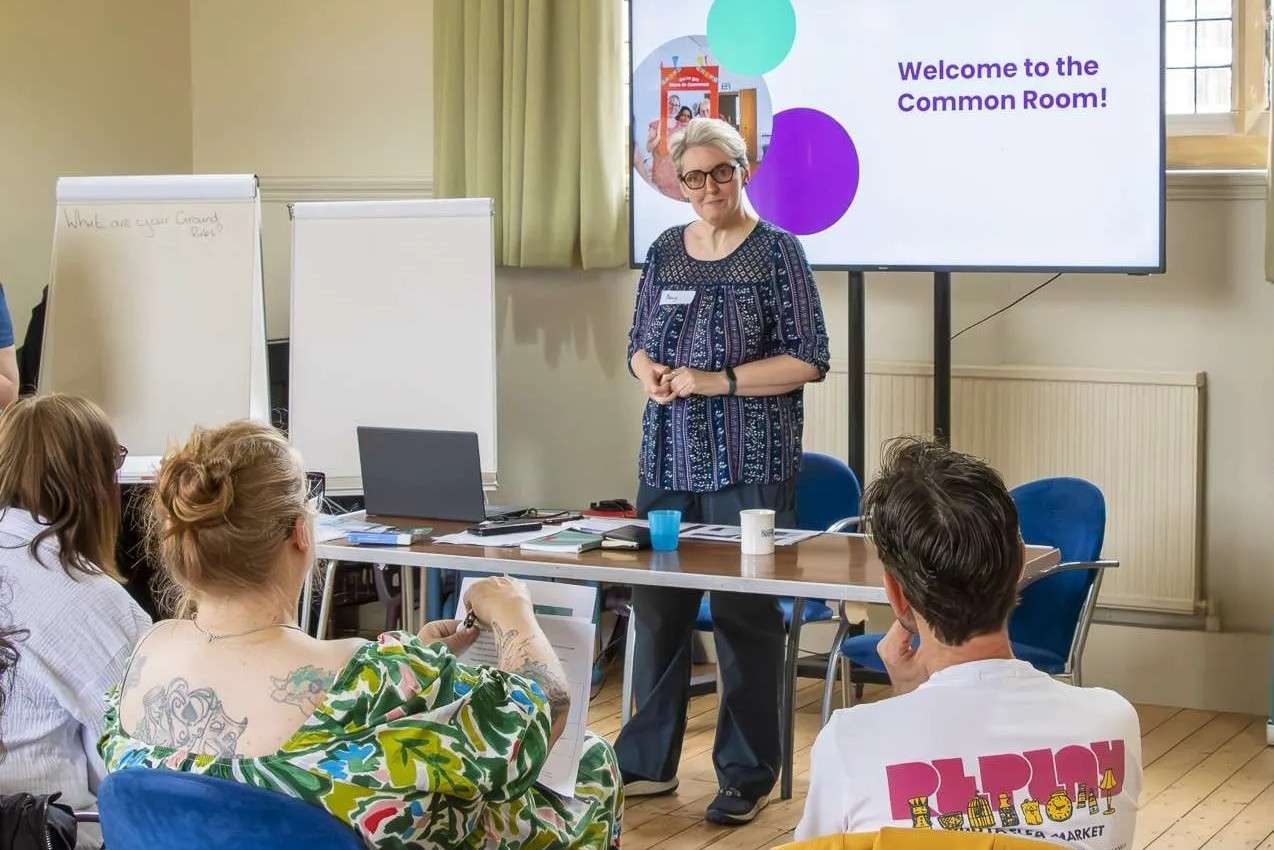
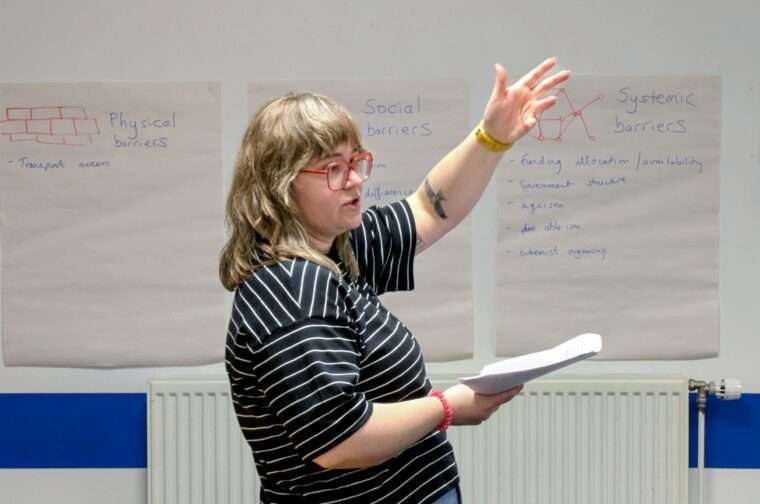
In March 2026, at Wychavon District Council’s Community Network Conference, we worked with around 60–70 VCSE practitioners to explore how connection is built — and sometimes strained — in communities.

Across two workshop sessions, people were asked to place real examples from their local area on a spectrum between “unity” and “division”. What stood out wasn’t where things landed, but how difficult they were to place at all.

Very few examples sat clearly at one end. Community events, local campaigns and even moments of crisis could be seen as bringing people together by some, while creating tension or discomfort for others.

Our workshop — More in Common: Fostering connection across difference in your community — explored how people working in communities can navigate these differences in practice, and build confidence to engage with them.

Designing the session

The conference, themed “Knowing Your Neighbourhood, because strong communities start with strong connections”, brought together people from across the voluntary, community and social enterprise sector in rural Worcestershire.

We were invited to design and deliver a workshop in response to this theme, building on over 10 years of working with community practitioners on social cohesion, including through the More in Common Network — a core project of The Jo Cox Foundation.

The workshop aimed to support community workers in thinking about how they navigate difference and division in their day-to-day practice, and was delivered twice during the conference by Zoe Cumberland — a Worcester-based facilitator specialising in community engagement.

At its core was a simple but challenging question: how do we hold difference, without letting it become division?

What we explored together

We started by asking people what unity and division actually look like in their communities, before asking for their gut reactions to a few scenarios.

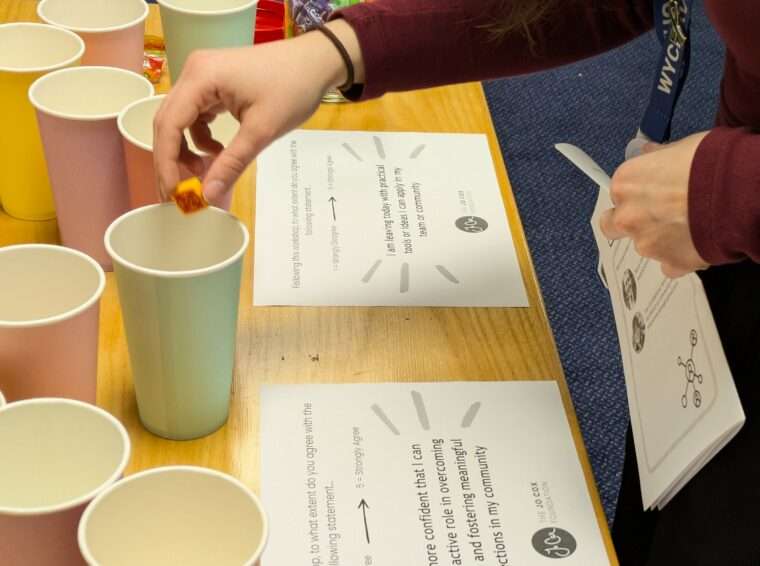
Using a “washing line” exercise, people then mapped real examples from across Wychavon along a spectrum between unity and division. These included things like community celebrations (food festivals, VE Day events and Christmas lights), support during crises (such as flooding and missing person searches), Afghan refugee families joining local BBQs, and counter-protests in support of refugees. Alongside this were more contested issues such as tensions around flags and national identity, responses to asylum hotels, housing developments and funding decisions, and antisocial behaviour and social media conflict.

These sparked discussion about how the same activity can create a sense of belonging for some, while feeling divisive or uncomfortable for others.

What people told us

People spoke about the value of stepping outside their own assumptions and approaching difficult conversations in a different way. As one participant put it, “You can’t plan for every scenario but being prepared in general for difficult conversations is possible.” Others reflected on the importance of perspective and pause — “park your personal views and try not to react immediately from your gut feeling response” — and on not feeling alone in these situations.

Many also talked about leaving with a new sense of perspective and energy, with words like “hopeful” used to describe how they felt.

Did we meet our aims?

87% said their understanding of unity and division had improved, 87% felt more confident to play a role in their community, and 94% left with practical tools or ideas they could use.

While most people reported increased confidence, for some the session highlighted gaps rather than immediately building it. We see that as a useful outcome in itself — helping to show where further support or space for reflection may be needed.

Beyond the numbers

Participants talked about how unity often shows up most clearly in moments of crisis, and how quickly perspectives can diverge depending on people’s experiences. There was also reflection on how something described as “community-led” can feel very different from something being “done to” a community.

Overall, a consistent theme was complexity — that experiences of unity and division depend on context, perspective and lived experience.

What’s next

There was strong interest in continuing the conversation, with participants keen to explore how this work could apply in their own contexts.

A few weeks after the event, Cllr Rob Adams, Executive Board Member for Strong Communities, Culture and Sport, said:

“At a time when national conversations can feel increasingly polarised, our local voluntary and community organisations valued the chance to pause, reflect, and think differently about their neighbourhoods. Sessions like this help people recognise their own role in building stronger, more connected communities — something that matters deeply to us in Wychavon.”

What this session reinforced is that building connection across difference doesn’t start with simple answers. It often starts with recognising that people may experience the same issue in very different ways.

For those working in communities, that means creating space to explore that complexity, rather than assuming shared perspectives. The level of engagement on the day suggests there’s a strong appetite for more spaces like this — where people can reflect, test assumptions and build confidence to engage with difference in practice.

If you’re interested in developing something similar — whether for a conference, event, or local programme — we’d love to hear from you. Contact us via [email protected].

Filed Under: More in Common Network

The Jo I Knew: Why Her Message Matters More Than Ever

April 22, 2026 by Will Fletcher

By Nisha Jani
Nisha is a member of the Board of Trustees of The Jo Cox Foundation. Her life was immeasurably improved when she made friends with Jo Leadbeater (before she was Cox!) at university and as a Trustee she aims to carry on the work Jo cared about.

When I think back to my time at university, the memories are often a blur of late-night socialising essay writing and the overwhelming mission of trying to find my place in the world as a young mixed-race lesbian. I am still very proud of getting my degree, especially while challenged by feeling like an outsider in the world of tradition and privilege that both Jo and I encountered while at Cambridge.

These memories are tempered by the warmth of many important friendships made which I still hold dear today. My cherished friendship with Jo Leadbeater is all the more poignant and powerful now for the fact that it has been cut short. 

Before she was Jo Cox MP – the tireless campaigner and humanitarian the world came to know – she was simply Jo, my friend.

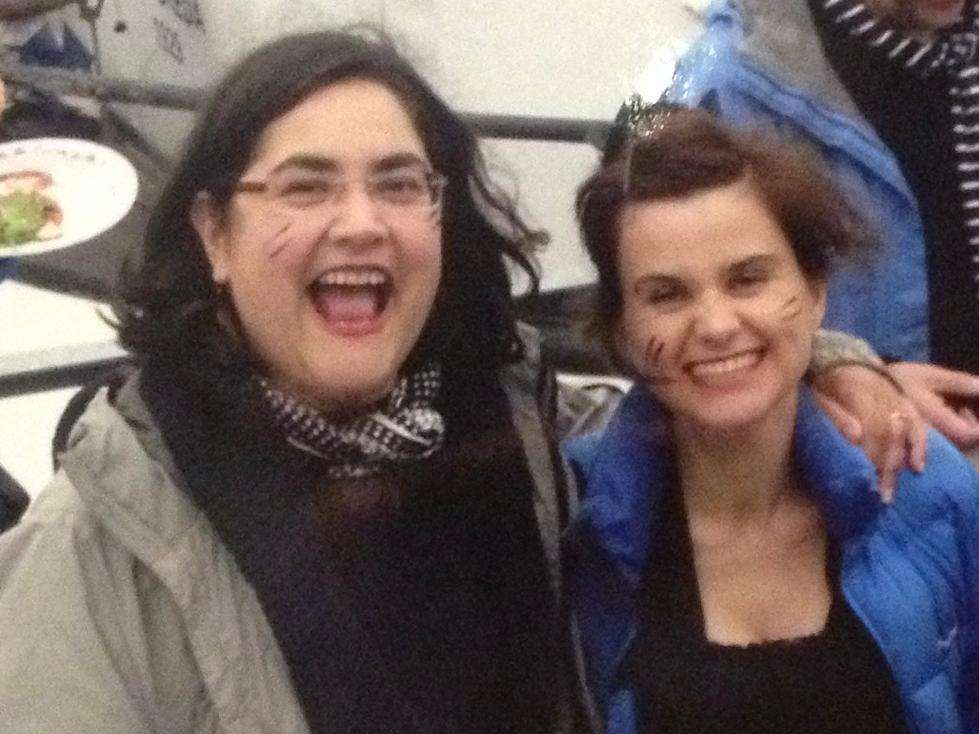
Photograph of Nisha Jani and Jo Cox. Nisha has her arm around Jo. They are both looking towards the camera and smiling broadly.

A Friendship that Started at University 

I first met Jo when she won a best sandwich competition that I hosted and judged (there is a photo but she’d be annoyed if I shared it). We were specially introduced as our mutual friend thought that fabulous women should know each other, and we quickly bonded over our complex Cambridge experiences. She was excited to be off to Indonesia to volunteer at an Orangutan sanctuary and then to start working in politics in London. 

On meeting her for the first time, I was immediately struck by Jo’s personal energy and massive ‘twinkle’ power – she was like a dynamo of bubbly magnetism – as well as her sense of fun, and love for and interest in others. She also had a sense of purpose and drive that was impressive in someone so young. She struck me as someone I definitely wanted as a mate, and we started a friendship we would both come to value through our lives.

Carrying the Torch

When Jo was murdered, the world lost an inspirational leader, but I lost a dear friend. I don’t get to have Jo in my life anymore, as I imagined I would, to celebrate birthdays and anniversaries and spend random Thursday nights together. But I do have The Jo Cox Foundation and my role as a Trustee through which to continue Jo’s legacy.

Jo and I shared a fundamental belief in the power of kindness and care in human relationships which I have been worried and dismayed to find in increasingly short supply since her murder nearly a decade ago. 

It was an honour to become a Trustee of the Foundation in 2022, and to play my part in continuing the work that Jo cared about so deeply. Whether we are nurturing stronger communities or advocating for more respectful politics, I am constantly guided by Jo’s friendly and calming reminder: “We are far more united and have far more in common than that which divides us.”

Ten Years On: The Power of ‘More In Common’

As we mark ten years since Jo was murdered, the weight of her absence is still felt by everyone who knew her. However, the legacy she left behind has never felt more alive, or relevant.

Our new short film reflects on Jo’s legacy and the incredible impact the Great Get Together has had over the last decade. It’s a tribute to the street parties, the shared cuppas, and the thousands of conversations that have proven, time and again, that we really do have More in Common.

Join Us for the 2026 Great Get Together

The Great Get Together captures Jo’s spirit perfectly. It isn’t about remembering how she died; it’s about celebrating how she lived by bringing people together who might otherwise never meet.

As a Trustee, my goal is to ensure that Jo’s message and values continue to spark real change. There is no better way to do that than by participating in the Great Get Together. 

In 2026, we want to make the Great Get Together bigger and more inclusive than ever. Whether it’s a street party, a shared lunch, or playing sports together, these moments of connection are the best possible tribute to Jo’s life.

Will you join us by organising a Get Together this year?

Register your interest in organisation a Get Together

Jo would have been delighted and super-proud to see so many people continuing to come together to choose tolerance, respect and care for others and were she with us still, she would be joining in with her usual gusto and helping hand round the tea and biscuits!

I feel that her spirit strongly inspires me and, potentially, all of us to focus on our common humanity and contribute more energy to connection and love, despite the challenging times we currently face. It means a huge amount to all who loved her to see people across the country coming together in Jo’s name. Thank you for being part of it.

Filed Under: Great Get Together, Jo Cox

Press Release: Ten years since Jo Cox’s murder, her Foundation invite communities to join the tenth Great Get Together 

March 16, 2026 by Will Fletcher

To mark the 10th anniversary of a movement that transformed tragedy into action and brought people together across the country, The Jo Cox Foundation has today launched the tenth Great Get Together that will take place from 19–21 June 2026.

Ten years ago, the murder of Jo Cox MP shocked and devastated the nation. But in the difficult days that followed, people responded with something Jo believed in deeply: connection. Neighbours came together. Differences were set aside. Communities united and have shared a Great Get Together every year since.

Sister of Jo Cox, Kim Leadbeater MP MBE:

“I find it incredibly hard to believe that it has been 10 years since my sister was murdered. We, as a family, miss Jo’s energy and enthusiasm – and always will – and as a country her compassion and strength of her conviction that we are far more united and have far more in common than that which divides us, are needed more than ever in today’s world. For a decade the Great Get Together has demonstrated the importance of Jo’s values and shown how we can put them into practice in our daily lives.”

Baroness Jan Royall, Chair of The Jo Cox Foundation, said:

“That initial response to Jo’s muder revealed something she lived by and fought for every day: that we are stronger when we come together and that we have far more in common than that which divides us. For Jo, connection wasn’t abstract – it was built through listening, talking, and treating one another with respect, even when we disagreed.”

In the years since, millions of people have carried that spirit forward. The annual Great Get Together is now a national tradition of street parties, community picnics, runs, coffee mornings and simple acts of togetherness. National polls estimate that more than 17 million people across the UK have taken part in Great Get Together events over the last decade.

Evidence from The Jo Cox Foundation shows these events help people feel more connected, increase belonging, reduce loneliness, and strengthen communities.

Olivia Field, Chief Executive at The Jo Cox Foundation, said:

“This anniversary is a moment of remembrance, but also one of incredible possibility. Over the last decade, we have seen that connection is a choice – and it’s a choice that people across the UK are making every single day. By acting on Jo’s belief that we have more in common than that which divides us, we can shape a more hopeful, connected future together. This year’s Great Get Together is one way to demonstrate that.”

This June, the public is invited to host an event in their local area. From 19–21 June 2026, the Great Get Together will once again see events – big and small – take place in every corner of the country. 

Whether you choose to organise a community-wide street party or a simple neighborhood cuppa, your event is a vital step towards a stronger, more connected future. The Foundation is calling on anyone who believes we have more in common than that which divides us to take part and help make this 10th anniversary the most connected year yet.

Laura Henderson, More in Common Llantwit, a long standing Great Get Together organiser added:

“Being part of the Great Get Together over the past 10 years has inspired so much of what we do locally — from hundreds of events including town trails, poetry workshops, and family picnics, to ongoing programmes that regularly bring people together, like weekly café meet-ups and our Community Cinema.

These events create spaces where people can connect, share, and feel supported. The spirit of the Great Get Together lives on, carrying on well beyond each gathering in the way people keep coming together, helping each other, and staying connected”

The Jo Cox Foundation has released a free 10th Anniversary Toolkit to help anyone organise an event. To get involved, visit: www.greatgettogether.org

To help mark the 10th anniversary as the most inclusive Great Get Together yet, The Jo Cox Foundation will also distribute £5,000 of micro-grants to community organisers across the UK, thanks to the support of GoFundMe. The grants will help cover practical costs such as venue hire, food and equipment, helping to ensure that those who might otherwise be unable to afford to host an event can take part.

John Coventry, Senior Vice President at GoFundMe, said: 

“GoFundMe’s partnership with The Great Get Together reflects our shared commitment to Jo Cox’s belief in the power of connection, continuing her legacy and bringing communities together when they need it most.”

Filed Under: Great Get Together, Stronger Communities

The Great Get Together 2025: A Celebration of Connection

December 3, 2025 by Will Fletcher

This year marked the ninth Great Get Together since Jo Cox was killed in 2016 – and once again, communities across the UK came together to show that we have more in common than that which divides us.

From street parties and storytelling sessions to refugee-led cooking events and interfaith gatherings, the 2025 Great Get Together was a vibrant, nationwide celebration of unity. Events took place in parks, schools, care homes, and community centres, helping neighbours meet – often for the first time – and sparking friendships that continue long after the bunting comes down.

The impact was clear:

  • 88% of attendees felt a greater connection to others in their community
  • 79% met people from different backgrounds
  • 86% said they were more likely to help neighbours or others in their community
  • 89% signed up to or joined a new activity in their local area

Organisers and participants shared powerful stories of how these gatherings broke down barriers, built trust, and created spaces where people felt safe, welcomed, and valued. From refugee families leading cultural celebrations in Epsom to young and old connecting through music and crafts in Harrogate, the Great Get Together helped foster empathy, understanding, and a stronger sense of belonging.

These events didn’t just bring people together – they inspired action. Many attendees went on to volunteer, join local groups, or organise their own community initiatives. The ripple effect of kindness and connection continues to grow.

📖 Read the full 2025 Impact Report here:

2025 Impact Report

Help Us Make the 10th Anniversary Unforgettable

In June 2026, we’ll mark ten years since Jo Cox’s death – and we want next year’s Great Get Together to be the most powerful yet. But we don’t have dedicated funding to make it happen.

We’ve launched a crowdfunding campaign to raise £20,000 so we can support organisers, build partnerships, and create resources that help communities across the UK come together.

If you believe in Jo’s message – and the power of connection – please consider donating today.

Donate to our crowd funding campaign

Together, we can make next year’s Great Get Together a moment of real, lasting impact.

Filed Under: Great Get Together, Stronger Communities

Help Us Raise £20,000 for Next Year’s Great Get Together

November 20, 2025 by Will Fletcher

Next year’s Great Get Together will take place from 19-21 June 2026. It will be a powerful moment to mark ten years since Jo Cox MP was killed – a tragic event that shocked the nation but also sparked a movement for unity, compassion, and connection. This legacy lives on through the Great Get Together, a nationwide celebration that brings people together across divides.

But here’s the truth:
The dedicated funding that once supported the Great Get Together has now come to an end.

But with your help, we can make the 10th anniversary our most unifying and impactful yet – a celebration powered by the people and communities who believe in Jo’s message and live it every day.

That’s why today, we’re launching our crowdfunding campaign to raise £20,000, and we’re asking for your support.

Donate to our crowdfunding campaign now

Why This Matters Now

The UK is more divided than ever. Political tensions, rising hate, and social isolation are tearing at the fabric of our communities. The Great Get Together is a joyful, grassroots response – a chance to bring people together across divides and show what community really means.

Next year’s Great Get Together isn’t just another set of summer gatherings. It’s a chance to honour Jo’s legacy, heal divisions, and show what community really means.

Be Part of Something Bigger

This is your chance to stand up for unity. To say “no” to division and “yes” to community. To honour Jo Cox’s legacy in the most powerful way possible – by bringing people together.

If you can’t donate, you can still help: share this fundraiser, organise your own event, or simply show your support by attending a Great Get Together.

❤️ Together, we can demonstrate that we have more in common than that which divides us.

What Your Donation Will Do

We’re aiming to raise £20,000 and every pound will go directly toward making next year’s Great Get Together bigger, bolder, and more impactful than ever.

Your support will enable us to:

  • 👥 Dedicate extra staff time to coordinate the national campaign and support hundreds of local organisers
  • 🤝 Build partnerships with other organisations so we can reach as many communities as possible across the UK
  • 🛠️ Design practical, inspiring resources to help organisers plan inclusive, meaningful events
  • 🖨️ Print and distribute physical materials – banners, posters, activity packs, and more – that organisers can use on the day to bring people together

This isn’t just about one campaign. It’s about creating a ripple effect of kindness, empathy, and community across the country. With your help, we can make sure the 10th anniversary of Jo Cox’s legacy is a moment of real, lasting impact.

Donate to our crowdfunding campaign now

Whether you can give £5 or £500, every donation helps us honour Jo’s legacy and bring people together when it’s needed most.

Thank you for being part of this movement.

Filed Under: Fundraising, Great Get Together

Refugee Families Take Centre Stage at Epsom’s Great Get Together

August 1, 2025 by Will Fletcher

Refugee families were at the heart of Epsom’s Great Get Together in June— bringing the day to life with crafts, cooking and musical performances. Attended by over 400 people, the event was co-hosted by Good Company and Epsom & Ewell Refugee Network as part of Refugee Week. It was a vibrant celebration of shared culture, connection, and community — bringing people together across backgrounds to build understanding and a sense of belonging.

We spoke to Nina Kaye at Epsom & Ewell Refugee Network, about what made the day so special — and why supporting refugees to take centre stage made all the difference.

Bringing ‘More in Common’ to Life

“For refugees who have left behind family, friends and culture, building community again in a new country is difficult. Epsom & Ewell Refugee Network has always prided itself in being a bridge to help connect refugees with people and organisations where they can start to build new relationships and find opportunities to give them a voice in our community. Our values align so closely with Jo Cox’s ‘more in common’ message, that it made sense to be part of the national programme.”

Feeling Seen, Heard and Valued

The Great Get Together created a warm and welcoming space where refugees, asylum seekers and local residents could come together, relax, and enjoy themselves.

“There was so much enjoyment, laughter, warmth and friendship among all the refugees and asylum seekers who attended.”

The event’s warm and welcoming atmosphere was the result of thoughtful planning to ensure everyone felt included, safe and valued — something that clearly resonated with attendees, as shown in a heartfelt message from an Eritrean refugee who has been supported by the network for six years:

“Thank you so much for organising this beautiful Family Day event. Today was truly unforgettable, filled with love, warmth, and a deep sense of safety. It was inspiring to see so many vulnerable refugee families brought together with the wonderful Epsom community. Thank you for creating such a special atmosphere and for all your efforts.”

Building Community Connections

The day in Epsom showed how events that intentionally create opportunities for refugees and local residents to meet, relax, and celebrate side by side can foster shared experiences that can powerfully shift community relationships.

“There is nothing quite like sharing food, music and sport for people to realise how much they have in common. When different groups of people come together to share a good experience, it makes everyone realise that they can connect with people who come from different backgrounds and have such varied life-experiences.”

One of the event’s greatest achievements was supporting refugees to participate in ways that mattered to them.

“Everyone left with a feeling of happiness and contentment. Many of the clients we support were helping on the day with craft, cooking and entertainment. It was really important to them that they were able to take an active role in delivering the event.”

Thanks to a legacy donor and corporate sponsor, the entire event was free—including entrance, entertainment, food, and activities—making it accessible to everyone. Families enjoyed a variety of activities and diverse foods like Turkish gözleme, Afghan biryani, and homemade treats, plus free ice cream for every child. Entertainment featured Epsom’s Ukrainian choir, a refugee brass band, and a Disney sing-along. Attendees were also given the option to opt out of photos with bright green stickers to respect their privacy. MP, Helen Maguire, and mayor, Robert Leach, were there for the whole time, talking to everyone and enjoying themselves—something that meant a lot to the organisers and those at the event.

Looking Ahead

The event has sparked enthusiasm and confidence among the refugee community to participate in more local activities. A number of the refugees who took part have already said they would be keen to support similar community events in the future.

“We are looking for opportunities for the Ukrainian choir and some of the ladies who do craft to attend other local events. The Great Get Together has definitely given them more confidence to be seen at other community events.”


Would you like support with organising a Great Get Together that brings people together across different backgrounds in 2026? Contact us at [email protected] or visit our resources page

Find out more about Epsom & Ewell Refugee Network here 

Filed Under: Great Get Together, Stronger Communities

Manchester More in Common partnership celebrates volunteers’ commitment to community

April 17, 2025 by Will Fletcher

Manchester More in Common partnership began working together in 2024 around a shared goal of cohesion across Manchester. The partnership brings together various organisations and groups including National Trust, City Year UK, Groundswell Project, People’s History Museum, Manchester University Students’ Union and gunnercooke Foundation.

In February, the partnership held their first event together. Each partner felt it was important to create space for the volunteers across Manchester to feel appreciated and celebrated. In effect, the event was an opportunity to express gratitude towards the individuals who make meaningful contributions to the community. The event was held at the People’s History Museum, so people didn’t need to look far to see the importance of community and connection!

Attendees had the opportunity to work with a local artist to create moss heart decorations to take home. These were a great way for them to relax and channel their creativity whilst also building connections with others in an informal setting.

Other activities included an at-home growing kit for everyone to take home with them. The kit included coriander, chilli, basil, radish and tomato seeds. These kits are an opportunity for each individual to create space for stillness and appreciation for months to come. 

Already, some people have reconnected and planned ways to work together in the future. Attendees from the Nigerian Community of Greater Manchester hosted representatives from Manchester University Students’ Union and the Incredible Edible and Tree Musketeers student groups. Connections were deepened and strengthened over plates of jollof rice and plenty of good conversations.

We can’t wait to see what the Partnership does next!  The Manchester More in Common partnership is a member of a nationwide network of groups and partnerships that share a common value of community. If you are interested in joining the More in Common network or would like to know more, email us at [email protected]

Filed Under: More in Common Network, Stronger Communities

More In Common Nottingham Women’s Group: A Great Winter Get Together art exhibition

March 27, 2025 by Will Fletcher

Dr Sally Olewe-Richards

Chair, Empowered Women UK and founder of the More In Common Nottingham Women’s Group

Sally Olewe-Richards set up the community group Empowered Women UK in 2022 to get funding to run workshops and gatherings for women from a diverse range of backgrounds around Nottingham. In 2023 they set up a Women’s More in Common group and held their first art exhibition at a local community centre in January this year. Here we speak to Sally about the build up to the exhibition and what it has meant for the community and the women involved.

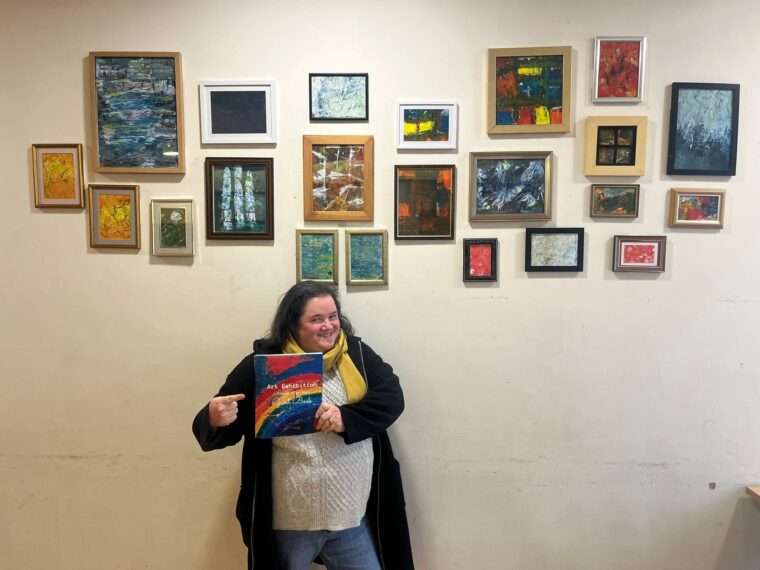
Dr Sally Olewe-Richards at the Nottingham Great Winter Get Together art exhibition

The build up to the exhibition: A Beautiful Success and Growing Confidence

“In 2023, I secured funding to run women’s art wellbeing activities as part of our More In Common work in Nottingham. I reached out to Marija, a local artist, to run a workshop for the Great Get Together in June. At first, she was hesitant because she’s self-taught and creates for her own wellbeing, she also wasn’t sure about whether people would be accepting of her being Lithuanian. But after I reassured her it would be a safe space, she agreed, and we included her background on the event posters as she requested.

The event was a huge success, and the women who attended asked if the art workshops could be held more frequently. So, from October to December 2024, we paid Marija to lead a fortnightly session for us at a local community center, with 6 to 9 women attending. We had great feedback from them about how it was boosting their confidence and well-being. Marija, too, was growing in confidence and suggested we showcase the women’s art. So, we worked with the community center, and in January, we held an exhibition for the Great Winter Get Together.

Exhibiting the Work: A Celebration of Community and Art for the Great Winter Get Together

We had the small ‘opening’ event, where we provided soft drinks and a chance for people from the community to come together and socialise. The artwork is spread across the cafe and hall at the centre and it will be in place for a few weeks. 

Everyone has been really thrilled and it’s helped to build confidence. It’s a very white British area, so seeing artwork from a range of local women, including those from Ukraine and Lithuania, has helped make them feel more accepted and created a different dialogue within the centre. At the event there were people with physical and learning disabilities, those from the black African community, LGBT+ attendees and a range of ages from a baby to 70s.

One of our attendees is here from Ukraine under refugee status. She really enjoyed the session and it gave her and Marija (the art workshop leader) a chance to converse in Russian together, which they both greatly appreciated. Kateryna’s work has been very popular and admired at the community centre cafe and she is keen to do more sessions. 

For me, I’ve grown up in this area but haven’t been involved with the community much until recently. Partnering with the community centre to run the art wellbeing sessions and then this exhibition for Great Winter Get Together has allowed me to feel a greater sense of belonging and to get to know more people in the area.

It’s all been really positive and well received and the community centre manager has said the art work has created a great talking point for people coming to the centre. It’s also attracted a few people who’d not used the centre before but went along for the event and have now started to use the cafe (including myself!).

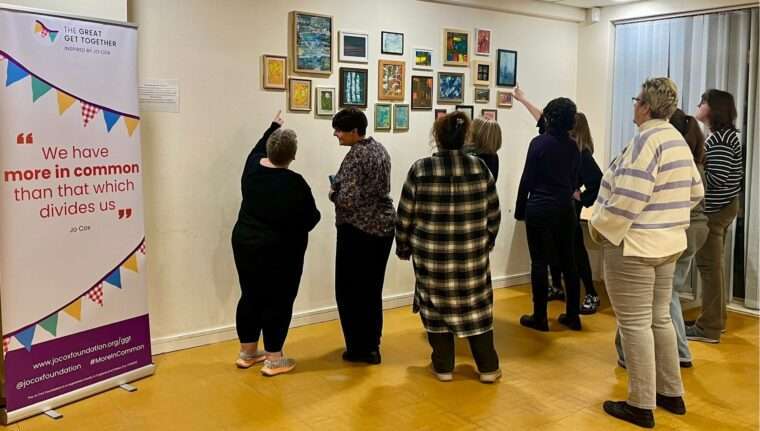
Visitors to the Nottingham Great Winter Get Together art exhibition view the artworks on display

Looking Ahead: What’s Next for the More In Common Nottingham Women’s Group?

The manager of the community centre is delighted with the outcome of the exhibition, so it’s been really positive and we hope to run a few more across February and March. We will be running more art well-being sessions as we know there is a desire for them. I have been into the community centre cafe 1-2 times a week since the event and recognised people to chat to, whereas before I never went in there.

For one of the women from the group, it has led to her taking on a public artwork piece at a local hospital:

I loved the abstract art sessions so much so it has given me the confidence and inspiration to paint a picture for our local children’s hospital, in remembrance of my late mum who worked there. The joy of art and sharing it to make others feels better is just a gift.

After connecting with Kateryna, from Ukraine, and becoming aware of the need for women from Ukraine to have more befriending support, we have applied for funding to see if we can pay her on a freelance basis to run a project from March 2025 – we are waiting to hear the funding outcome. Whether we’re successful or not, it’s a nice outcome for her that she’s made new friends and knows that we believe and trust in her abilities.

Filed Under: Great Get Together, Stronger Communities, Uncategorised

Taking the Middle Ground:  How to respond to extreme views in your area

March 21, 2025 by Will Fletcher

Participants of the Common Room event in Cardiff in July 2024 gained new insight into how the far right work from workshop facilitator Gareth Harris.

Tracey Brown from Rubicon Dance said that:

Hearing from someone with the knowledge, experience and view points that Gareth has – a training like no other I have done before in terms of the subject matter. It was incredibly useful and important to hear and see different perspectives.

The aims of the session were to 

  • get an overview of anti-minority action in the UK particularly Wales
  • share our knowledge and experience of responding to anti-minority extremism
  • hear practical examples on how to deal with anti-minority organisations
  • explore ideas for how we can take action in our communities to be protected against extremism and reduce our vulnerability

Gareth explained the importance of Narratives:

  • A narrative is a story that sets an event(s) into a meaningful context
  • An interpretation of the world from a specific perspective
  • How persuasive a narrative is, is supported by the credibility of who is telling it and …
  • Rests on pre-existing knowledge/lived experience and the wider context
  • People/narratives compete for credibility
  • Extremists use narratives to support their views of the world & gain support

People shared their knowledge and experience of responding to anti-minority extremism in the Cardiff area and what works to counter this.

We watched a film of a community meeting which involved people expressing genuine grievances, attributing blame to people seeking asylum and migrants. 

 We broke into groups to discuss a scenario, with five questions:

  1. What are the risks?
  2. Underlying grievances? – How do you know and how do we address them?
  3. Agencies/ orgs/ individuals to talk to
  4. What would be your messaging?
  5. Practical steps? Who should take them?

Thirty two people took part in the Common Room session, sharing ideas about what makes a narrative credible and the effects of anti minority action, how to find out underlying grievances in communities and how to build trust to give people confidence that they are being heard.

What did people get from the Common Room?

People left with a sense of connection to others working to counter hate and felt strongly that they were likely to use the knowledge gained from this session in their work.

Laura from More In Common Llantwit Major found it was:

A useful, well considered and timely session with real examples. It was a practical informative session which helped clarify actions to take and most importantly what to look out for regarding fake posts intended to divide.

What did we learn? 

  1. Communities which have systemically been “left behind”, lack investment and engagement in democratic processes and those which experience trauma are targetted by anti-minority groups. The key to building the strength of local communities to resist anti-minority groups is to listen and build trust and respond effectively to their genuine concerns. 
  2. We have to work with the legitimate grievances that people have, not lecture people or overwhelm them with facts/ stats. We need to listen to people and respond to show we have heard them and how we are going to act on their concerns. This depends on honesty and engagement with the community for the long term. Politicians and public organisations need to work with the community. This is critical to counter feelings of being done to, and powerless. It’s also important to have trusted messengers to share credible narratives.
  3. An in-person Common Room event connected people, increased their knowledge, strengthened collaboration and boosted membership of the local More In Common Partnership. People at the event shared resources with each other after the event to support local action.

Shockingly, within a week of the event, a series of violent protests took place around the country, instigated by some of the anti-minority groups which Gareth informed us of.  This involved people who were expressing their concerns about their communities such as poverty, violence against women and lack of resources.  It reinforced our learning and the need for more opportunities to have conversations about building trust and bridging divides in communities. 

Join the Cardiff Together More In Common Partnership 

You are invited to join the Cardiff Together More In Common Partnership. For information contact Nick and Adam at [email protected]

What’s next?

In 2025 we are holding series 5 of the Common Room programme in Cardiff, Nottingham and Stoke on Trent, and one online, between March and June, working with Gareth Harris for some of them. These events will be by invite only, to keep the spaces safe and focussed. However we are always keen to speak with potential collaborators, so if you would like more information or to arrange a chat please email [email protected]. 

We are planning our More In Common In Action conference in Manchester in May, an opportunity for More In Common Groups and Partnerships and interested individuals to share learning and ideas for action. Please sign up to the More In Common Newsletter at the bottom of this page if you would like to know what’s coming up.

Filed Under: More in Common Network, Stronger Communities

Troubling conversations in everyday settings

March 13, 2025 by Will Fletcher

There are many things we can do in our communities to disrupt division, one of the most important is dialogue based on genuine listening.  This was one of the things participants valued about the Common Room in Bradford in July 2024 – taking away a recognition of the value of listening.

Two facilitators from Who Is Your Neighbour? led our Common Room in Bradford. Who Is Your Neighbour? has for 15 years been holding conversations. These welcome difficult subjects like race, immigration and culture and aim to disrupt divisive influences. Rooted in and working around South Yorkshire, WiYN? also supports others who seek to bridge divides, build trust and cope well with change in their unique context.

The aims of the session were to:

  • have experienced a difficult conversation in a different way
  • feel hope and possibility that difficult conversations are possible and can end well
  • be curious to know more about Who Is Your Neighbour? approach

What we did at the session…

We were invited to identity our gut response to hearing troubling things. This was to help us be aware of things that have a strong impact on us, that “push our buttons”. We reflected on what happens to us when we hear those things? This self awareness is very valuable to help us decide how to react.

Violet explained that we have options when we decide how to respond. We can:

  • shut it down
  • open it up
  • walk away
  • something else

Deciding what to do in reaction to hearing a troubling topic

There are a range of options for responding to troubling topics which include opening up a conversation.

The facilitators set out the room into 4 areas, and invited us to move into a different area, depending on what we thought we might be most likely to do in response to different statements.

To help us decide how we want to respond, we were offered a few questions:

  • Where are you?
  • Who else is around?
  • What’s your role?
  • Do you need to consider your safety and wellbeing?
  • Do you need to consider the safety and wellbeing of others?
  • Do you need to think about impact on relationships
  • Do you feel confident having this conversation?
  • What are your red lines, the things that are completely unacceptable?

Opening up a conversation

The facilitators role played a bus stop conversation, on a troubling topic which led to an argument. They replayed it using some of the techniques below to open up the conversation without provoking aggression.

Techniques included:

  • Reframing what someone says
  • Asking questions to understand
  • Acknowledging the speaker’s experience
  • Acknowledging the speaker’s fears or worries
  • Encouraging curiosity about the other people the speaker is talking about

Reframing is a way of restating what someone says to achieve one or more of the following:

  • Eliminate blame, accusation or derogatory content
  • Identify the underlying need or concern
  • Emphasise a goal the person wants to achieve
  • Change a negative statement into a positive one

Once you’re in a conversation you might judge that continuing with it isn’t the best thing to do. It could be going nowhere and things might be becoming entrenched. You can shut it down or walk away, or something else, at any point.

What did people get from the Common Room?

Joanne from LS14 Trust found the bus stop scenario showed her “how to change the conversation”.

Many people said they valued making connections with other course participants, and sharing information and resources including those for working with young people to talk about conflict, build empathy and promote cohesion.

Pete said:

Thanks to everyone who showed up. I think it’s ABOUT showing up! I took away [the] power there is in really listening, and equally the satisfaction in being heard by my peers. I talked with several people and felt their passion at the training.

What did we learn?

  1. Self awareness and critical reflection on our practice is an essential skill for community workers, and the encouragement to pause and notice our gut reactions to troubling topics reminded us of the value of this. We learned the topics that give us the strongest reaction, and how we typically respond to sensitive topics.
  2. It is possible to have better conversations on troubling topics, when we choose too, by reframing what we hear, to genuinely listen to understand how people are feeling and their underlying concerns. We became aware of the options available when we are deciding how to respond. This increased our confidence with possibly choosing to open up a troubling conversation in some circumstances.
  3. There many connections made between people working across Yorkshire at this in-person session, with a lot of interest in follow up conversations and further training.

The Common Room session was unexpectedly timely, as within a month of the event, a series of violent protests took place around the country including in Leeds. This involved people who were expressing their concerns about their communities such as poverty, violence against women and lack of resources.

It reinforced our learning and the need for more opportunities to have conversations about building trust and bridging divides in communities.

The WIYN? approach offers a format for listening and supporting communities who are fearful and have needs that are not being met, to talk about their genuine concerns which are expressed as hate, mistrust and prejudice.

Find out more on their website https://whoisyourneighbour.org.uk/

WIYN? offer:

  • in-depth / follow-on training on ‘how to respond to troubling conversations in everyday settings’
  • facilitated conversations about immigration, race, cultural difference
  • training and support in holding facilitated conversations

Exploring bridging and belonging in North Kirklees

We’re pleased to have received funding from the National Lottery Community Fund for an 18-month project (May 2024 – October 2025) to help us bring communities together through a series of events in Batley, Dewsbury and Heckmondwike. These events will explore the themes of community, place and belonging, and will help us create a shared vision for the future of the area. To find out more please contact [email protected]

What’s next?

In 2025 we are holding series 5 of the Common Room programme in Cardiff, Nottingham and Stoke on Trent, and one online, between March and June, working with Who Is Your Neighbour? for some of them. These events will be by invite only, to keep the spaces safe and focussed. However we are always keen to speak with potential collaborators, so if you would like more information or to arrange a chat please email [email protected].

We are planning our More In Common In Action conference in Manchester in May, an opportunity for More In Common Groups and Partnerships and interested individuals to share learning and ideas for action. Please sign up to the More In Common Newsletter at the bottom of this page if you would like to know what’s coming up.

Filed Under: More in Common Network, Stronger Communities

Bridging Divides through Social Action

March 7, 2025 by Will Fletcher

Community Organising is a trusted approach to building power in communities to enable Social Action to tackle social injustice..

In June 2024,  The Jo Cox Foundation was joined by the Faith and Belief Forum (Walsall) and Under One Roof (Stoke) online for a Common Room session. 

Hearing from projects in different areas of the West Midlands gave examples of ways to bridge divides through social action. Martin, an independent researcher, appreciated hearing from these “two exemplary practices for bridging communities and faiths”.

The aims of this session were to: 

  • learn about the Community Organising Framework for Social Action
  • hear practical examples of what helps to build trust and bridge divides in communities
  • share our experiences of developing relationships, connecting diverse people, learning from each other and taking action on shared concerns.
  • develop ideas for things we can do to bring diverse people together in a way that leads to social change

Poet and Creative Producer Gabriella Gay has been working on the Under One Roof Community Heritage Project in Stoke on Trent. 

Gabriella invited everyone to bring an object to show which would help them talk about their culture for 3 minutes in a small group.

Laura really liked this Culture Share activity at the start and said “I’d like to work with that more when working with diverse groups in the future”

Under One Roof is led by St Mark’s Church and All the Small Things Social Action Hub. All the Small Things listen in, and support communities to tackle shared concerns. All the Small Things approach is underpinned by the Community Organising Framework for Social Action. 

Through recent listening one of the priorities people are gathering around is community cohesion.

Under One Roof engaged Poet and Creative Producer Gabriella Gay as an artist in residence. She is a Trinidad born page-stage poet, artist, vintage dealer,  qualified teacher, PhD researcher and creative producer based in Staffordshire. Gabby is regularly commissioned to perform, write, organise events and facilitate workshops for a wide range of organisations including the BBC,  the NHS and The National Theatre.  She is the founding member of Stoke’s Roaming Poets and Kwanzaa Collective UK.

Gabriella spent some months with local communities trying to find out where they congregate, their relationship to St. Mark’s and listen to them reflect on the past, present and future of St. Mark’s church and Shelton. Gabriella presented The Problem and Vision as she saw it: 

How can St. Mark’s reflect and celebrate the richness of the ethnically diverse communities that surround it?  

How can it be an asset to the community, and a place where a wider mix of ethnically diverse groups see it a place to congregate?

Gabby organised four Culture Share events in Shelton for Under One Roof.  Key Ingredients of Culture Share are : 

  • Invitation to come together and share something from your culture, family or heritage… a song, a story, a ritual, a dance, a dish! Or simply come to connect with friends old and new. Each had up to 5 minutes to share something. 
  • Music
  • Food

Gabby reached out into the wider Shelton area, listened to people of different faiths and identities and formed relationships with cultural leaders locally to co-design events with them. 

  • NORSACA African Caribbean Community Centre – 50 people. 
  • St. Mark’s Primary School – 53 parents and young people. 
  • Stepping Stones Islamic Community Centre – 35 women and girls.  
  • St. Mark’s Church – 140 people from diverse communities including people who had taken part in the previous 3 events.

Gabriella’s key learning was:

  • Be open to learning – including the importance of visuals such as world maps; to talk slowly and be considerate of people who have English as a second language; to plan for breaks; to curate events to have a range of music, dancing etc. and seek permission for photographs,
  • Adapt, Respond, Be Flexible – especially learning the importance of key religious times of the year and day for different communities.
  • Importance of Cultural Differences and Nuances, particularly dance, photography and communication e.g. one Culture Share event was for women only and we photographed mainly hands and back of heads.
  • Logistics Really Matter! 
  • The importance of regular gathering and community support

The relationships with community organisations have continued, with Gabriella volunteering at a local Asylum Seekers support organisation and at Stepping Stones. She has worked on another project at St Mark’s Primary School and was invited to support them to organise their own Culture Share events including their Summer Fayre held in the Churchyard. 

Martin reflected he was “Struck by Gabriella finding communities did not have many existing cross-links, and understood that schools are a social and cultural as well as an educational resource themselves.”

Mahmooda Qureshi from the Faith and Belief Forum shared her experience of leading Solihull Faith Action Project. Mahmooda is a Community Organiser, and also works for The Ella Baker School of Organising. 

The Faith and Belief Forum work to build good relations between people of all faiths and beliefs, and to create a society where difference is celebrated. They create spaces in schools, universities, workplaces and the wider community where people can engage with questions of belief and identity and meet people different from themselves. 

In August 2022, the Faith New Deal (FND) initiative commissioned projects across the UK to explore possibilities of new partnerships between Faith-Based Organisation (FBOs) and statutory services. This initiative came as a response to the Kruger report, quoted above, which called for a “new deal” between government and faith communities, “actively supporting the extraordinary work of organisations of all faiths.”  

The Solihull Faith Action project involved:

  • sessions to staff at Solihull Council – two Faith Inclusion Skills Workshops and one Encountering Faiths & Beliefs Webinar
  • 40+ individual chats with members of diverse faith communities identifying their:
    • Concerns
    • Hopes 
    • Fears
    • Their relationship with the council 
  • recruitment of 14 representatives from faith-based organisations to take part in the project
  • a programme of sessions with faith-based organisations
    • 6 Social Action Workshops
      • Getting to know one another
      • Principles of working together
      • Listening Campaign
      • Mapping issues in Solihull 
      • Action Planning
      • Action & Evaluation
    • 1 information session led by Solihull Council ‘Understanding how the council works’
    • 1 Networking Event – the group presented action plans to the community and the Solihull Council leadership

Actions following the project include:

  • 3 organisations registered as Place of Welcome 
  • Fill out 7 food bank boxes during Ramadhan 
  • Run Multi-faith walks 
  • Add our projects on Solihull Council Map 
  • Join the Food Bank Network 

Mahmooda reflected that having the Local Authority  initiate the programme was important. It showed that our communities are recognised & valued. Other things that helped included:

  • Shared decision making
  • Meeting frequently in various faith related places
  • Having creative visual tools such as the large map of Solihull had impact.
  • Networking at and between events including on WhatsApp

You can join the Facebook page Solihull Faith Action Project for regular updates on what’s happening and look out on the council website.

One participant said they learned about “the challenges and barriers experienced by speakers when running their events, and the ways they overcame these barriers.

What did we learn? 

  1. Community Organising enables community workers to connect people in communities over shared concerns to build power for collective action to tackle inequalities. This starts with reaching out and listening. 
  2. The Culture Share activity is very adaptable and can take 15 minutes or 3 hours, can be done online or in person and is effective in enabling people to better understand each other. The co-design process is critical, to build trusting relationships which make the events inclusive and welcoming, and allow the relationships to continue beyond the events. The events act as sparks to enable people to understand each other and bridge divides longer term. 
  3. Solihull Faith Action project demonstrated that with time to get to know each other, people from diverse faith communities who do not usually mix, can learn, plan and take action together. Bringing those people together with the local Council, each learning from the other, can build trust between the Faith sector and local authority.

The Common Room session was unexpectedly timely, as within 3 months of the event, a series of violent protests took place around the country including in Leeds. This involved people who were expressing their concerns about their communities such as poverty, violence against women and lack of resources. 

It reinforced our learning that building trust and bridging divides in communities relies on connecting people over shared concerns to build power and take action together. 

Check out these resources

Watch the Common Room recording here

The Community Organising Framework

Community Organisers Ltd training – regular free taster training sessions online, full courses online and in person for a fee. All the Small Things run this training in Stoke-on-Trent – for information about the next course please contact [email protected] 

What’s next?

In 2025 we are holding series 5 of the Common Room programme in Cardiff, Nottingham and Stoke on Trent, and one online, between March and June. These events will be by invite only, to keep the spaces safe and focussed. However we are always keen to speak with potential collaborators, so if you would like more information or to arrange a chat please email [email protected]. 

We are planning our More In Common In Action conference in Manchester in May, an opportunity for More In Common Groups and Partnerships and interested individuals to share learning and ideas for action. Please sign up to the More In Common Newsletter at the bottom of this page if you would like to know what’s coming up.

Filed Under: More in Common Network, Stronger Communities

  • Page 1
  • Page 2
  • Page 3
  • Interim pages omitted …
  • Page 9
  • Go to Next Page »

Footer

Fundraising Regulator badge with validation link
  • Twitter
  • Facebook
  • Instagram
  • LinkedIn

Contact us

About us

Jobs

Donate

The Jo Cox Foundation is a registered charity (no. 1170836) and registered company (no. 10392667) in England and Wales.
The Jo Cox Foundation © 2026. All Rights Reserved. | Privacy policy