There are many things we can do in our communities to disrupt division, one of the most important is dialogue based on genuine listening. This was one of the things participants valued about the Common Room in Bradford in July 2024 – taking away a recognition of the value of listening.
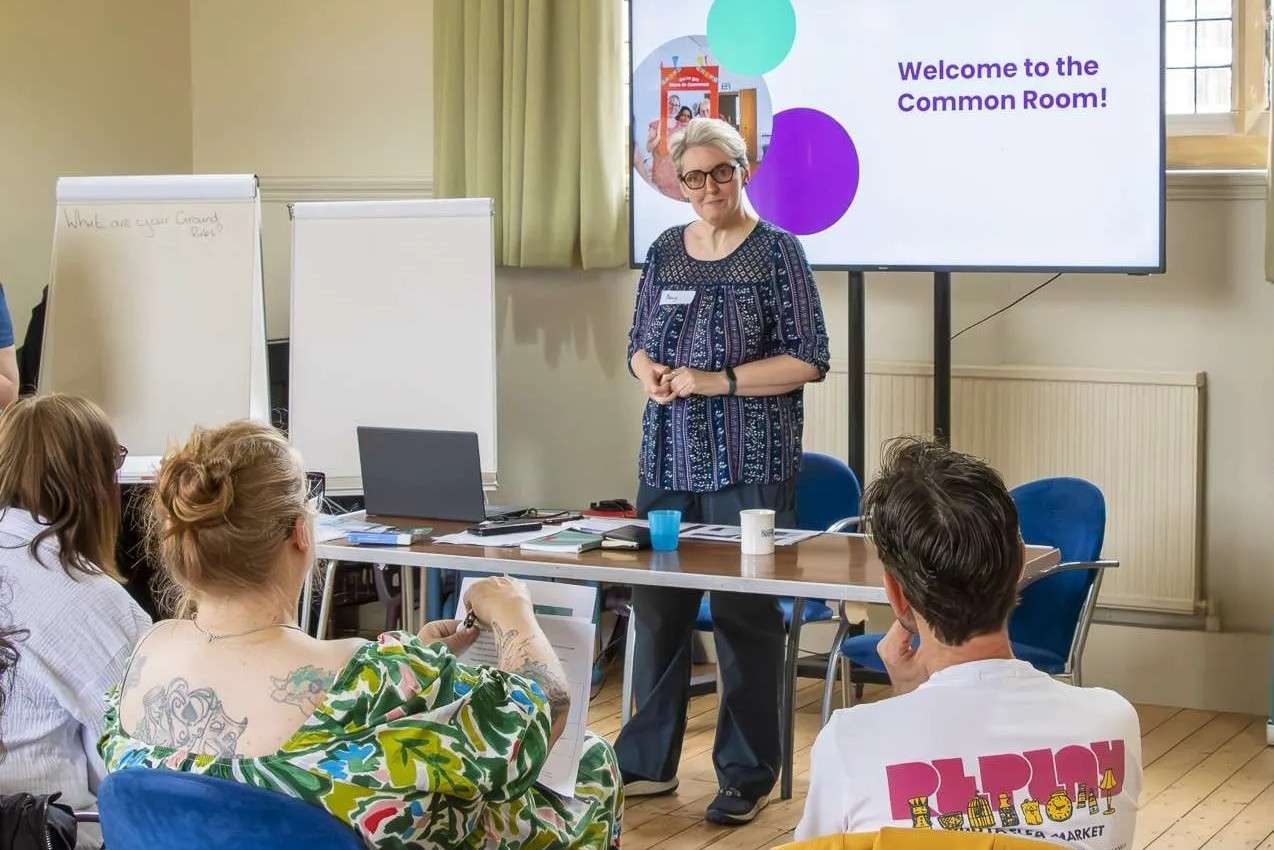
Two facilitators from Who Is Your Neighbour? led our Common Room in Bradford. Who Is Your Neighbour? has for 15 years been holding conversations. These welcome difficult subjects like race, immigration and culture and aim to disrupt divisive influences. Rooted in and working around South Yorkshire, WiYN? also supports others who seek to bridge divides, build trust and cope well with change in their unique context.
The aims of the session were to:
- have experienced a difficult conversation in a different way
- feel hope and possibility that difficult conversations are possible and can end well
- be curious to know more about Who Is Your Neighbour? approach
What we did at the session…
We were invited to identity our gut response to hearing troubling things. This was to help us be aware of things that have a strong impact on us, that “push our buttons”. We reflected on what happens to us when we hear those things? This self awareness is very valuable to help us decide how to react.
Violet explained that we have options when we decide how to respond. We can:
- shut it down
- open it up
- walk away
- something else

Deciding what to do in reaction to hearing a troubling topic
There are a range of options for responding to troubling topics which include opening up a conversation.
The facilitators set out the room into 4 areas, and invited us to move into a different area, depending on what we thought we might be most likely to do in response to different statements.
To help us decide how we want to respond, we were offered a few questions:
- Where are you?
- Who else is around?
- What’s your role?
- Do you need to consider your safety and wellbeing?
- Do you need to consider the safety and wellbeing of others?
- Do you need to think about impact on relationships
- Do you feel confident having this conversation?
- What are your red lines, the things that are completely unacceptable?
Opening up a conversation
The facilitators role played a bus stop conversation, on a troubling topic which led to an argument. They replayed it using some of the techniques below to open up the conversation without provoking aggression.
Techniques included:
- Reframing what someone says
- Asking questions to understand
- Acknowledging the speaker’s experience
- Acknowledging the speaker’s fears or worries
- Encouraging curiosity about the other people the speaker is talking about
Reframing is a way of restating what someone says to achieve one or more of the following:
- Eliminate blame, accusation or derogatory content
- Identify the underlying need or concern
- Emphasise a goal the person wants to achieve
- Change a negative statement into a positive one
Once you’re in a conversation you might judge that continuing with it isn’t the best thing to do. It could be going nowhere and things might be becoming entrenched. You can shut it down or walk away, or something else, at any point.
What did people get from the Common Room?
Joanne from LS14 Trust found the bus stop scenario showed her “how to change the conversation”.
Many people said they valued making connections with other course participants, and sharing information and resources including those for working with young people to talk about conflict, build empathy and promote cohesion.
Pete said:
Thanks to everyone who showed up. I think it’s ABOUT showing up! I took away [the] power there is in really listening, and equally the satisfaction in being heard by my peers. I talked with several people and felt their passion at the training.
What did we learn?
- Self awareness and critical reflection on our practice is an essential skill for community workers, and the encouragement to pause and notice our gut reactions to troubling topics reminded us of the value of this. We learned the topics that give us the strongest reaction, and how we typically respond to sensitive topics.
- It is possible to have better conversations on troubling topics, when we choose too, by reframing what we hear, to genuinely listen to understand how people are feeling and their underlying concerns. We became aware of the options available when we are deciding how to respond. This increased our confidence with possibly choosing to open up a troubling conversation in some circumstances.
- There many connections made between people working across Yorkshire at this in-person session, with a lot of interest in follow up conversations and further training.
The Common Room session was unexpectedly timely, as within a month of the event, a series of violent protests took place around the country including in Leeds. This involved people who were expressing their concerns about their communities such as poverty, violence against women and lack of resources.
It reinforced our learning and the need for more opportunities to have conversations about building trust and bridging divides in communities.
The WIYN? approach offers a format for listening and supporting communities who are fearful and have needs that are not being met, to talk about their genuine concerns which are expressed as hate, mistrust and prejudice.
Find out more on their website https://whoisyourneighbour.org.uk/
WIYN? offer:
- in-depth / follow-on training on ‘how to respond to troubling conversations in everyday settings’
- facilitated conversations about immigration, race, cultural difference
- training and support in holding facilitated conversations
Exploring bridging and belonging in North Kirklees
We’re pleased to have received funding from the National Lottery Community Fund for an 18-month project (May 2024 – October 2025) to help us bring communities together through a series of events in Batley, Dewsbury and Heckmondwike. These events will explore the themes of community, place and belonging, and will help us create a shared vision for the future of the area. To find out more please contact [email protected]
What’s next?
In 2025 we are holding series 5 of the Common Room programme in Cardiff, Nottingham and Stoke on Trent, and one online, between March and June, working with Who Is Your Neighbour? for some of them. These events will be by invite only, to keep the spaces safe and focussed. However we are always keen to speak with potential collaborators, so if you would like more information or to arrange a chat please email [email protected].
We are planning our More In Common In Action conference in Manchester in May, an opportunity for More In Common Groups and Partnerships and interested individuals to share learning and ideas for action. Please sign up to the More In Common Newsletter at the bottom of this page if you would like to know what’s coming up.